
Fitness habits for cold days: When winter hits, everything slows down. The air feels heavier, the days end earlier, and the blanket starts winning every argument. Even people who are usually consistent with workouts find themselves thinking, “I’ll restart in spring.” And honestly, if you’ve said that, you’re not alone.
But you don’t have to go into full hibernation mode. With a little adjustment (and a lot less pressure), you can keep moving through winter in a way that feels realistic.
Also Read | Indoor cardio workouts for winter that actually burn calories
Why winter makes exercise feel harder:
- It’s not just “laziness.” Winter genuinely changes how your body feels.
- Cold weather makes muscles feel tighter and stiffer, so movement feels harder at the start.
- Shorter days mean less sunlight, which can affect energy and mood.
- The brain naturally leans towards rest when it’s dark and cold, so motivation drops faster.
So yes, it’s normal to slow down. The goal isn’t to hit personal records in December. It’s simply to keep your body and mind gently active.
Pick an indoor movement you actually enjoy:
Winter is the best time to make workouts easier and more “home-friendly.” You don’t need a gym or fancy equipment. You need something you’ll actually do. Try:
- dancing to 2–3 songs in your room (it counts, and it’s fun)
- YouTube workouts: yoga, Pilates, stretching, beginner strength
- indoor cycling or treadmill, if you have access
- low-impact strength with resistance bands or bodyweight moves
The best winter workout is the one that doesn’t feel like a punishment, and doesn’t require you to step into cold air before you’re ready.
Bundle up and take a walk:
Winter doesn’t mean you have to stay all day indoors. Even a short walk can lift your mood, get blood flowing, and give your eyes a break from screens and indoor air. It doesn’t have to be long; 10 minutes a day still counts.
To stay warm outside:
- dress in layers so you can adjust easily
- wear a cap and gloves (you lose heat fast from your head and hands)
- choose warm socks and comfortable shoes/boots with good grip

Create a cosy workout corner at home:
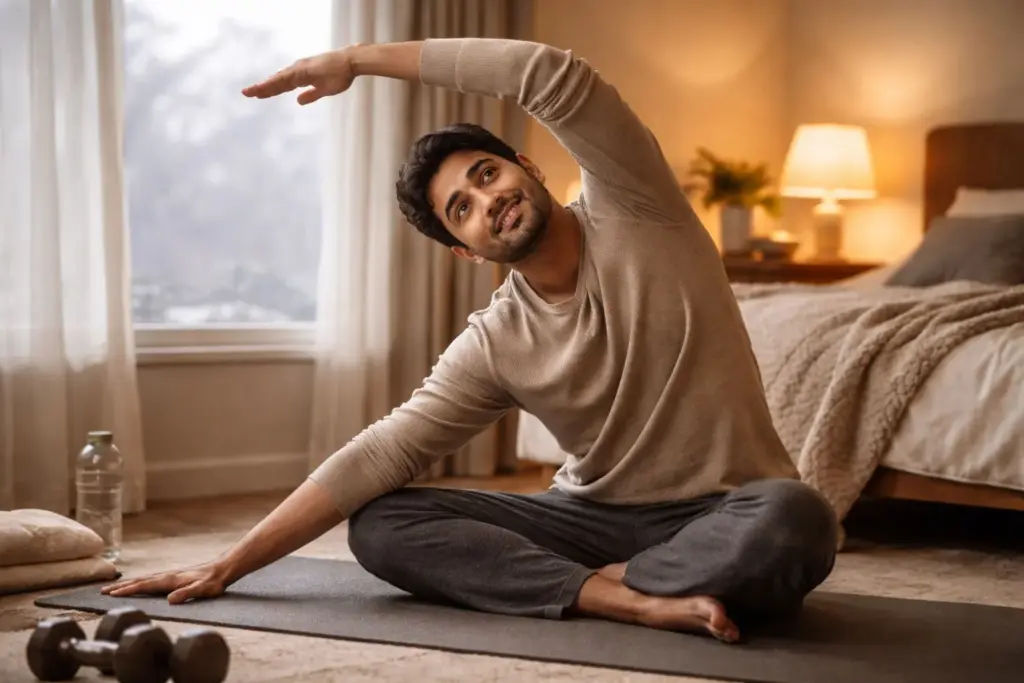
If stepping out feels impossible, make your home feel like a place where movement is easy. A small corner is enough, as long as it feels inviting.
You can keep:
- a yoga mat
- soft lighting (lamp/candle glow if you like)
- a warm blanket nearby
- a speaker for music
- enough space to stretch without bumping into furniture
- When the space feels comfortable, you’re more likely to actually use it.
Make movement social:
It’s easier to stay consistent when you’re not doing it alone. Winter can be a good season to build a simple routine with someone; support makes cold days feel less heavy. Try:
- walking with a family member or friend
- joining a virtual step or workout challenge
- fixing one weekly online yoga/exercise session with a buddy
Start small and don’t guilt yourself:
Winter naturally slows the body down. Instead of pushing for long workouts, aim for small, repeatable habits.
For example:
- 5 minutes of stretching in the morning
- a 10-minute walk after lunch
- 15 minutes of yoga before bed
Warm up properly:
Cold weather can make muscles and joints feel tight. A gentle warm-up helps your body ease into movement and reduces the chance of strain.
Simple warm-ups:
- March in place
- light jogging on the spot
- arm circles + shoulder rolls
- slow squats
- gentle stretches
Also Read | Should you workout on an empty stomach or after food?
Staying active in winter doesn’t need to be intense or complicated. The real aim is to keep your body moving in a way that feels doable and even comforting. Think of it as winter movement that supports you, not punishes you.