


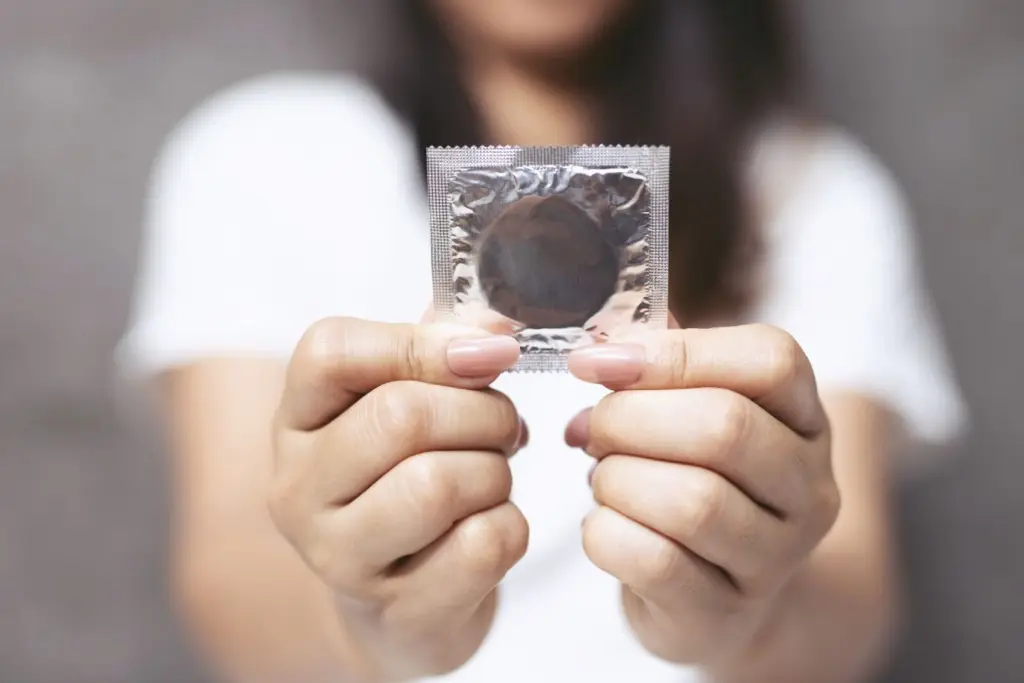
Female condoms: When most people hear the word condom, they automatically think of the male condom. But there’s another option many still don’t know much about: the female condom. It’s a form of birth control that sits inside the body and gives the woman more say and control over her sexual health, with a few underrated advantages.
What is a female condom?
A female condom is a thin, flexible pouch that you place inside the vagina before intercourse. It lines the vaginal walls and acts as a barrier so that sperm cannot reach the egg.
It has two soft rings:
- One ring at the closed end goes deep inside the vagina and helps keep the condom in place
- The other ring stays outside, covering part of the vulva and adding an extra layer of protection
Most female condoms are made from nitrile or other latex-free materials, so they’re a good choice for anyone with a latex allergy.
Also Read | Are hickeys dangerous and how can you make them fade faster?
How effective are female condoms?
With perfect use, it can prevent pregnancy in the vast majority of cases. In real life, effectiveness is lower, mainly because of common mistakes such as not inserting it fully, putting it in too late, or letting the penis slip outside the pouch.
What are the benefits of female condoms?
Like male condoms, female condoms block sperm from reaching the egg, which lowers the chances of pregnancy. But they offer another big advantage: protection against sexually transmitted infections (STIs). Because the outer ring sits outside the vagina and covers part of the vulva, it shields areas that a regular male condom may not completely cover.
Another key benefit is control. With a female condom, you don’t have to depend only on your partner to use protection. You can decide to use it yourself and insert it before sex, so there’s less pressure, fewer awkward last-minute conversations, and more peace of mind.
What are the differences between male and female condoms?
| Features | Female condom | Male condom |
| Who wears it | Inserted into the vagina | Worn on penis |
| Effectiveness | Worn on the penis | 85–98% (depends on use) |
| STI protection | Yes | Yes |
| Material | Nitrile (latex-free) | Mostly latex, some non-latex |
| Control | Woman-controlled | Man-controlled |
| Can you insert before sex? | Yes, up to 8 hours before | No, only right before sex |
| Availability | Less common | Widely available |
| Cost | Slightly more expensive | Generally cheaper |
How to use female condoms correctly?
To get the best protection, technique matters. Keep these points in mind:
- Check the expiry date on the packet before using it.
- Open the wrapper gently so you don’t tear the condom with sharp nails or jewellery.
- Squeeze the inner ring and insert it deep into the vagina; the outer ring should stay outside, resting against the vulva.
- Guide the penis into the condom pouch, making sure it doesn’t slip between the condom and the vaginal wall.
- Use a water-based or silicone lubricant if needed to reduce friction and any rustling noise, and to make sex more comfortable.
Who might want to try female condoms?
Female condoms can be a great choice if you:
- Want more say and control over your contraception
- Prefer a non-hormonal method
- Are allergic or sensitive to latex
- Want protection from both pregnancy and sexually transmitted infections (STIs)
- Like the idea of inserting protection before sex, so things don’t get interrupted
Also Read | What happens if you use an expired condom? Signs, risks, and fixes
With a little practice and the right technique, female condoms can be a comfortable way to protect yourself. They may not be as famous as male condoms, but female condoms are safe, effective and genuinely empowering. They help prevent pregnancy, lower the risk of STIs, and give you more control over what happens with your body.