

Fix weak bones in women: Your bones are working for you all day long, helping you walk, climb stairs, carry bags, play with your kids and even sit upright. But for women, bones go through many more changes than most people realise. Hormones, pregnancies, long gaps without exercise and everyday habits can slowly chip away at bone strength over the years.
Bone health isn’t only about “not breaking a hip” at 70. Strong bones are what keep you active, steady on your feet and independent as you age. It’s never too early, or too late, to start taking care of them.
With the right mix of nutrition and regular movement, you can protect and even rebuild bone strength at any stage of life.
Also Read | Is it normal to have cramps a week before your period?
Why is bone health vital for women?
Women are more prone to bone loss than men. After menopause, oestrogen levels drop sharply, and this hormone plays a key role in protecting bone. When it falls, bones start breaking down faster than they are rebuilt, raising the risk of osteoporosis, a condition where bones become thin, fragile and can fracture even after a minor fall or bump. In India, estimates suggest that roughly one in three women over the age of 50 has osteoporosis or low bone density.
The worrying part is that bone loss is usually silent. There’s no pain, no obvious warning signs at first. It builds up slowly over the years, which is why starting bone care in your 20s and 30s can make a huge difference to how strong and stable you feel later in life.
Calcium: Your bones’ best friend
Calcium is the star nutrient when it comes to strong bones. Nearly 99% of the calcium in your body is stored in your bones and teeth, giving them their strength and density. During your growing years, calcium helps you build bone mass; later in life, it helps slow bone loss and maintain bone strength.
Your calcium requirement changes at different stages of life:
- Teen girls (13–18 years): around 1,300 mg per day
- Adult women (19–50 years): about 1,000 mg per day
- Women over 50 / post-menopause: about 1,200 mg per day
- Pregnant & breastfeeding women: around 1,000 mg per day
Calcium-rich foods in an Indian diet:
- Dairy: milk, curd, paneer, cheese
- Millets: ragi (finger millet)
- Seeds & nuts: sesame seeds (til), almonds
- Green leafy vegetables: spinach, methi, drumstick leaves
- Soy products: soy milk, tofu
- Fish: especially those eaten with bones, like sardines
Vitamin D: The partner nutrient
Even if you’re getting enough calcium, your body cannot use it properly without vitamin D. Vitamin D helps your intestines absorb calcium from your diet and ensures it is deposited into your bones, where it is needed.
Daily vitamin D requirement:
- Women (all ages): usually 600–800 IU per day
- To correct deficiency: often 1,000–2,000 IU per day, but only under a doctor’s supervision
Common signs of vitamin D deficiency:
- Constant tiredness or low mood
- Bone or back pain
- Muscle weakness or heaviness in the legs
- Falling sick frequently
Vitamin K2:
Most of us have heard endlessly about calcium and vitamin D, but vitamin K2 quietly works in the background, ensuring that calcium is used in the right place. Think of it this way:
Vitamin D helps your body absorb calcium from food. Vitamin K2 helps direct that calcium into your bones and teeth instead of letting it settle in your arteries or other soft tissues. It does this by activating specific proteins that “escort” calcium to your bones and teeth, while helping protect blood vessels and soft tissues from unwanted calcium deposits.
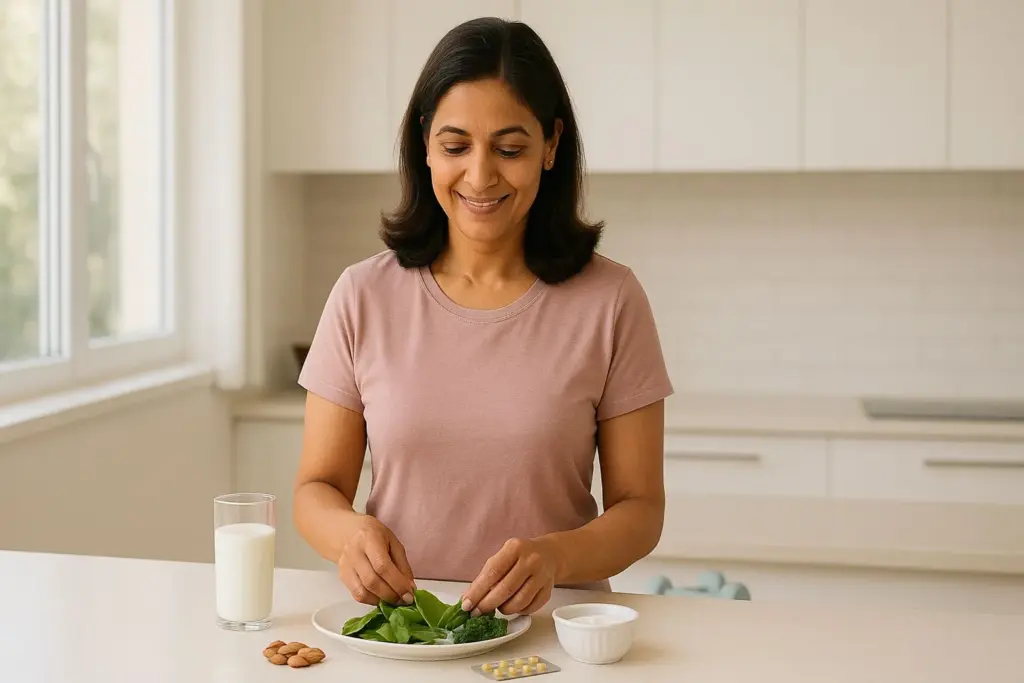
Foods that naturally contain vitamin K2:
- Fermented foods such as natto (fermented soybeans, traditionally eaten in Japan)
- Cheese and yoghurt
- Egg yolks
- Chicken and organ meats like liver
Why strength training matters for bones?
Food and supplements are only one part of the story. Your bones also need movement and load to stay strong. When you walk, lift, jump, or push against resistance, your bones sense that stress and respond by becoming denser and tougher over time.
Here’s how different types of exercise help:
Weight-bearing exercises:
- Examples: walking, jogging, hiking, dancing
- These activities make your body work against gravity and help build strength in the hips, legs, and spine.
Resistance training:
- Examples: dumbbells, resistance bands, squats, push-ups
- These exercises challenge both muscles and bones, supporting increased bone density and better overall strength.
Balance & flexibility work:
- Examples: yoga, Pilates, Tai Chi
- These may not “load” your bones as much, but they improve posture, stability, and coordination, which helps reduce the risk of falls and fractures as you age.
Even 20–30 minutes of a mix of these activities on most days of the week can make a meaningful difference over time.
When should you consider a bone density test?
A bone density (DEXA) scan can help detect early bone loss before fractures occur. It’s especially worth discussing with your doctor if you are:
- A woman over 50
- Postmenopausal
- Someone who has had frequent fractures
- Someone with a strong family history of osteoporosis
Also Read | Can you drink coffee while pregnant? Expert advice
Strong bones are the base of a strong, active life. As women, you often pour your time and energy into caring for everyone around you. But the body that carries you through all of this also deserves consistent care. Nourishing food, smart movement, and timely health checks are not luxuries; they are essentials.