
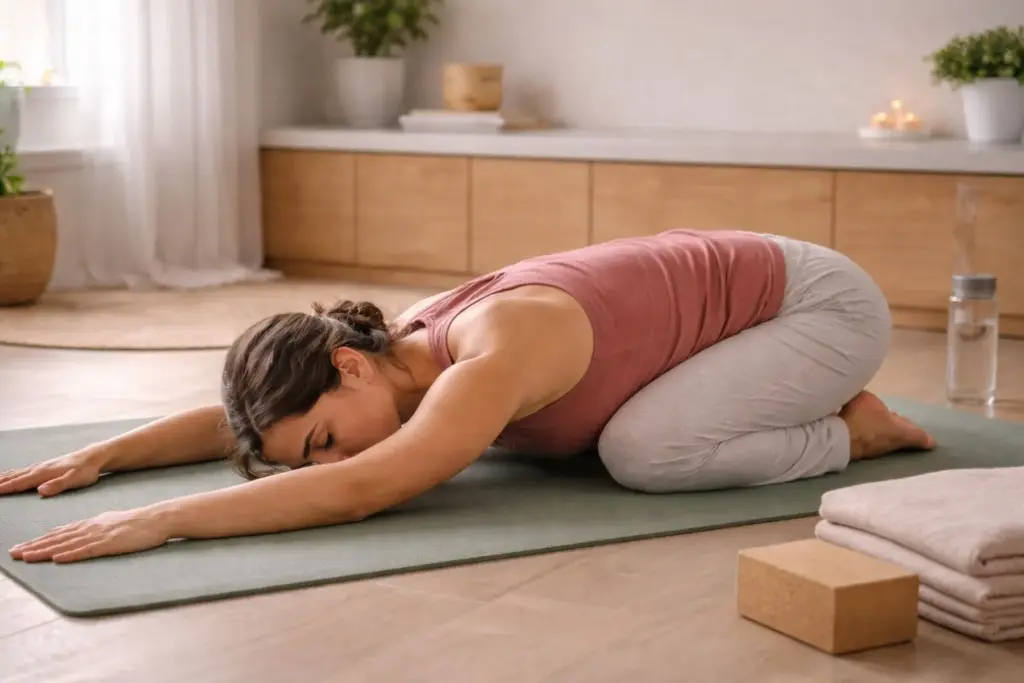
Yoga during periods: Periods can be uncomfortable, but that doesn’t mean that your wellness routine should come to a halt. Contrary to popular belief, gentle physical activity like yoga during menstruation can be a powerful way to relieve period discomfort and support hormonal balance in women.
Light yoga during periods can improve blood circulation and reduce bloating. It can also calm the mind and ease irritability.
However, not all yoga poses are safe or beneficial during menstruation. Understanding which poses to practice and which ones to avoid can make all the difference. Avoid poses that stress the pelvic region and instead focus on poses that open the hips and back.
Also Read | How to get stronger with yoga at home using simple props
Here are some postures you should consider:
- Child’s pose(Balasana): Helps relieve lower back pain and also creates space in the abdomen.
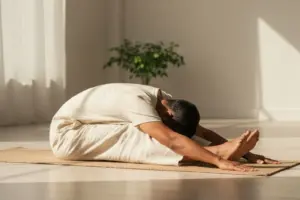
- Seated Forward Fold (Paschimottanasana): Stretches the spine and hamstrings to help relieve back pain.
- Reclined Bound Angle Pose (Supta Baddha Konasana): Helps in opening of the hips and relieves menstrual discomfort.
- Supine Twist (Supta Matsyendrasana): Aids digestion and releases spinal tension.
- Legs Up the Wall (Viparita Karani): Reduces fatigue, promotes relaxation, and soothes heavy legs.
These poses are recommended to relieve discomfort and reduce cramps, but there are poses you should avoid doing or modify.
Yoga poses to avoid during periods:
- Twists: Avoid doing deep twists, especially if you’re experiencing cramps. Power yoga or intense core-focused poses can feel uncomfortable.
- Deep backbends: Poses like wheel Pose (Urdhva Dhanurasana), which have deep backbends, can increase pressure or strain the abdominal and pelvic region.
- Inversions: Shoulderstand, headstand, and handstand can disturb the natural downward flow and may increase bleeding. If inversions are a part of your routines, try gentler options like legs-up-the-wall.
- Intense core strengthening: Straining the core can worsen cramps and fatigue.
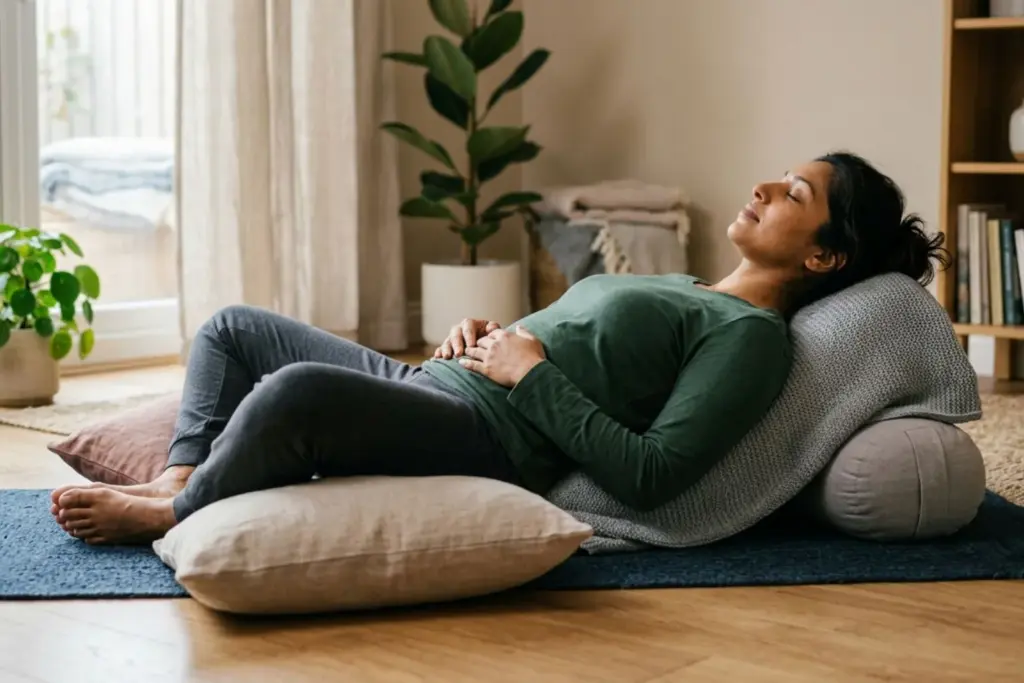
Factors to consider when you are doing yoga on your period:
You should always listen to your body first. If anything feels uncomfortable or painful, you can stop or modify the pose.
- Decrease intensity: Perform poses with slow movements. Consider practising at 70-80% of your normal energy levels.
- Keep yourself hydrated: Drinking plenty of water and staying hydrated can help your body.
- Focus on your breathing: Deep abdominal breathing can help reduce cramps.
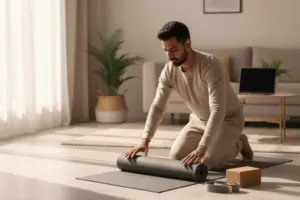
- Using props: Blankets, blocks, pillows, and bolsters can be used as props to provide comfort and support while doing yoga.
- Practice gentle pranayama: Certain pranayama practices can be calming and helpful.
Also Read | Power yoga vs. traditional yoga: Which is better for beginners?
If you feel uncomfortable or experience pain during periods, do not exert yourself. Yoga during your period isn’t about pushing your limits; it’s about supporting your body through rest and recovery. With the right approach, yoga can become a gentle tool for navigating your cycle with more ease and less pain.
FAQs: Is it safe to do yoga during your period?
Is it safe to do yoga during periods?
Yes, gentle yoga is generally considered safe during periods for many women. Slow, comfortable movements and supportive poses may help ease discomfort, but it is important to Can yoga help with period cramps?
listen to your body.
Can yoga help with period cramps?
Gentle yoga may help reduce period cramps by promoting relaxation, improving circulation, and releasing tension in the lower back, hips, and abdomen.
Which yoga poses should be avoided during periods?
It is often best to avoid deep twists, intense core work, strong backbends, and inversions such as headstand, handstand, and shoulderstand during periods.
Which yoga poses are good during periods?
Some commonly recommended poses during periods include Child’s Pose, Seated Forward Fold, Reclined Bound Angle Pose, Supine Twist, and Legs Up the Wall.
Can pranayama help during periods?
Gentle pranayama and deep breathing practices may help calm the mind, reduce stress, and support the body during menstruation.