

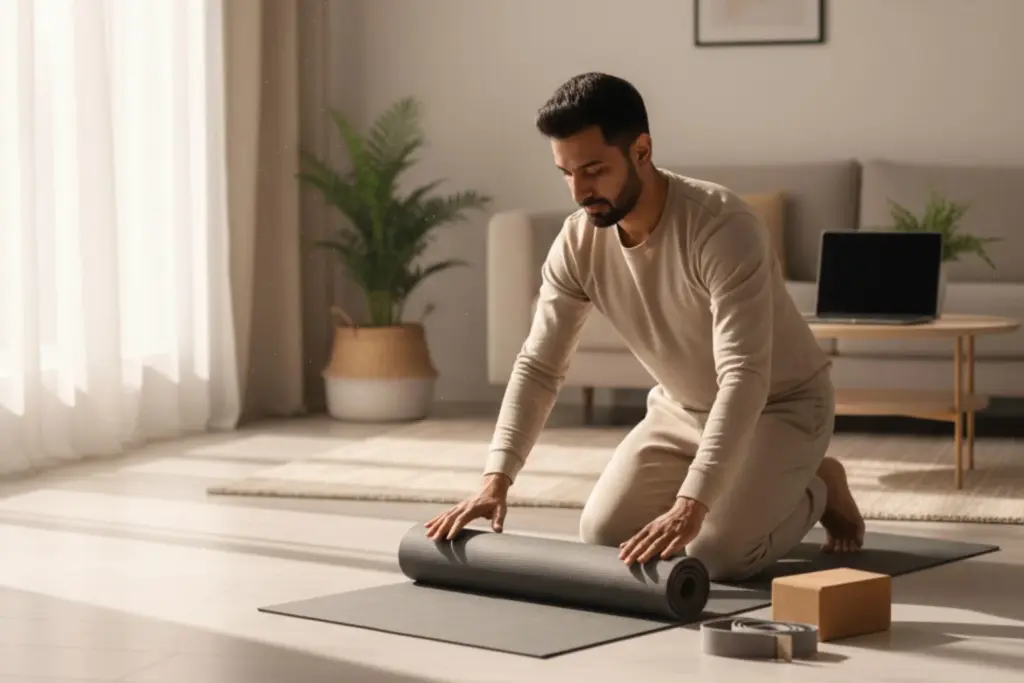
Common Yoga Mistakes: Yoga can look deceptively easy from the outside. Soft music. Slow stretches. People moving like they’ve got all the time in the world. Then you join your first class and realise your legs are shaking, your balance is wobbly, your breathing is all over the place, and your body feels stiff in places you didn’t know existed. That’s not you doing it “wrong”. That’s you starting where everyone starts, with a real, unfiltered body.
The good news? Most beginner mistakes are completely normal, and they’re easy to correct once you know what to watch for.
Also Read | How to combine yoga and walking to manage blood pressure naturally
Treating yoga like a pose checklist:
Many beginners think yoga is about “getting into the pose”. So they push their body into shapes, hold their breath, and tighten everything just to stay there. The result is often dizziness, tension, and a feeling of struggle.
Fix it: Shift your focus from shape to sensation. In every pose, ask: Can I breathe smoothly here? If the breath is strained, the pose is too intense right now.
Pushing too hard to ‘look good’:
You see deep backbends, splits, and perfect arm balances online, and it quietly turns yoga into a performance. Beginners often copy what they’ve seen, then wonder why their back hurts or their knees feel sore.
Fix it: Yoga is not about proving anything. Move only as far as you can stay steady, relaxed, and pain-free. Progress happens when you practice consistently, not when you force range before your body is ready.
Skipping the warm-up:
Cold muscles and tight joints don’t open up kindly. Jumping straight into deep stretches raises the risk of strain, especially in the hips, hamstrings, and lower back.
Fix it: Spend a few minutes warming up with simple movements: neck rolls, shoulder circles, cat–cow, gentle twists, and wrist/ankle mobility. Your practice will feel smoother instantly.

Locking the joints (Especially knees and elbows):
A very common habit is straightening arms and legs “hard” and locking the joints. It might look tidy, but it dumps stress into knees, elbows, and the lower back instead of building muscle support.
Fix it: Keep a tiny softness, a micro-bend, and let your muscles do the work. Your joints will feel safer, and you’ll actually get stronger.
Ignoring pain signals:
There’s a difference between stretch sensation and pain. A dull pull can be normal. Sharp, burning, stabbing pain is a warning. So is tingling, numbness, or pain in a joint.
Fix it: Back off immediately. Adjust the pose, use props, or rest. Yoga isn’t “no pain, no gain”. It’s an intelligent movement.
Forgetting alignment:
Small alignment issues add up. Knees collapsing inward, shoulders creeping toward the ears, rounding the spine in forward bends, or dumping weight into wrists can create discomfort now and problems later.
Fix it: Slow down and set your foundation. Keep feet stable, spine long, shoulders relaxed, and core gently engaged. If you’re unsure, ask your teacher; that’s literally their job.
Avoiding props because ‘they feel weak’:
Beginners sometimes avoid props like blocks, straps and cushions because they think props are only for inflexible people. In reality, props make poses safer, more supported, and often more effective.
Fix it: Use props without hesitation. A block in the triangle, a strap in the forward folds, a cushion under the hips; these adjustments can transform your experience.
Treating yoga as only exercise:
If yoga becomes just another workout, you may miss the part that changes everything: awareness. Yoga links body, breath, and mind. That’s why it reduces stress in a way many workouts don’t.
Fix it: Notice how your breath changes, where you hold tension, and what happens to your mind when you slow down. That’s the real work.
Also Read | 4 yoga asanas to keep your heart strong, steady, and calm
Everyone makes mistakes at the beginning, and that’s completely fine. What matters most is simple: breathe, move slowly, and listen to your body. Strength builds. Flexibility improves. Calm returns. Yoga isn’t about touching your toes. It’s about what you learn on the way down.
FAQs: What mistakes should beginners avoid while doing yoga?
Is it normal to shake during yoga as a beginner?
Yes. Shaking usually means your muscles are working in a new way, especially in balance poses, planks, and lunges. It improves with regular practice and better alignment.
How do I know if I’m pushing too hard in a pose?
If your breath becomes strained, your face tightens, or you feel sharp pain, you’re past your safe edge. You should be able to breathe steadily even in a challenging posture.
Do I need to warm up before yoga if the class is gentle?
A short warm-up is still helpful. Even gentle sessions feel better when your spine, shoulders, hips, wrists, and ankles are prepared.
How often should a beginner practise yoga?
Even 2–3 sessions a week help. Consistency matters more than intensity. A little, done regularly, changes your body faster than occasional long sessions.
Is yoga supposed to be relaxing? Why do I feel tired after?
Yoga can be both calming and physically demanding, especially at first. Fatigue is normal when you’re using neglected muscles and learning new movement patterns.