

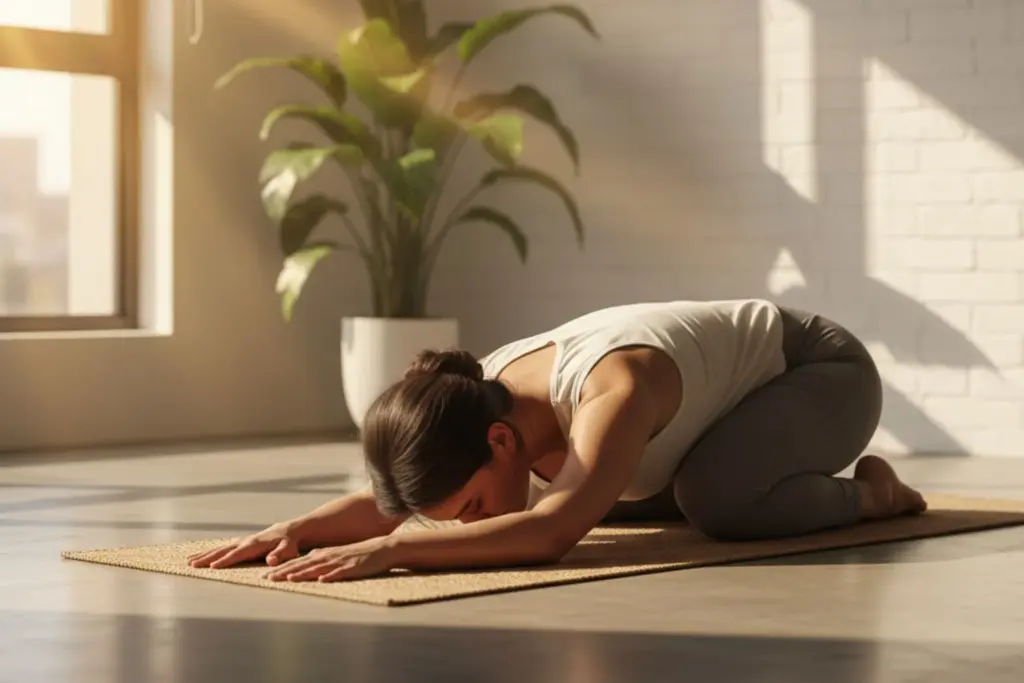
Does yoga help you lose weight: If you have just started yoga or are thinking of starting, one question naturally comes to your mind: how long will it take to get in shape? It’s a fair question. We all want to feel stronger, lighter, calmer and more flexible. And yoga promises all of that.
The timeline is different for everyone. It all depends on your body, your routine and the type of yoga that you practice. The good news? Yoga works, and it works really well. You just have to understand the process.
Also Read | Can a 10-minute yoga routine reduce neck pain?
What does getting in shape mean:
Getting in shape doesn’t look the same for everyone. For one person, it might mean touching the toes. Or it might mean losing weight, building strength, or simply feeling less stiff in the morning.
Yoga helps you get in shape in many ways:
- It builds lean muscles
- Improves flexibility
- Strengthens your core
- Reduces stress
- Helps with weight balance
- Improves posture and breathing
So how long does it take?
After 1 week, you will start feeling:
- Slightly more relaxed
- Less stressed
- A gentle improvement in flexibility
- Better sleep
After 2–4 weeks, you may notice:
- More energy
- Better balance
- Reduced body stiffness
- A little toning in your arms and legs
- Easier breathing
After 6–12 weeks:
This is when most beginners stop wondering if yoga is “working,” because the changes start feeling obvious.
- A stronger core and better body control
- Posture improves (you stand and sit taller without forcing it)
- Early visible toning often occurs around the arms, thighs, and midsection
- More flexibility, especially in the hips, hamstrings, and shoulders
- Less neck/back tightness for many people
- Better emotional steadiness and stress tolerance
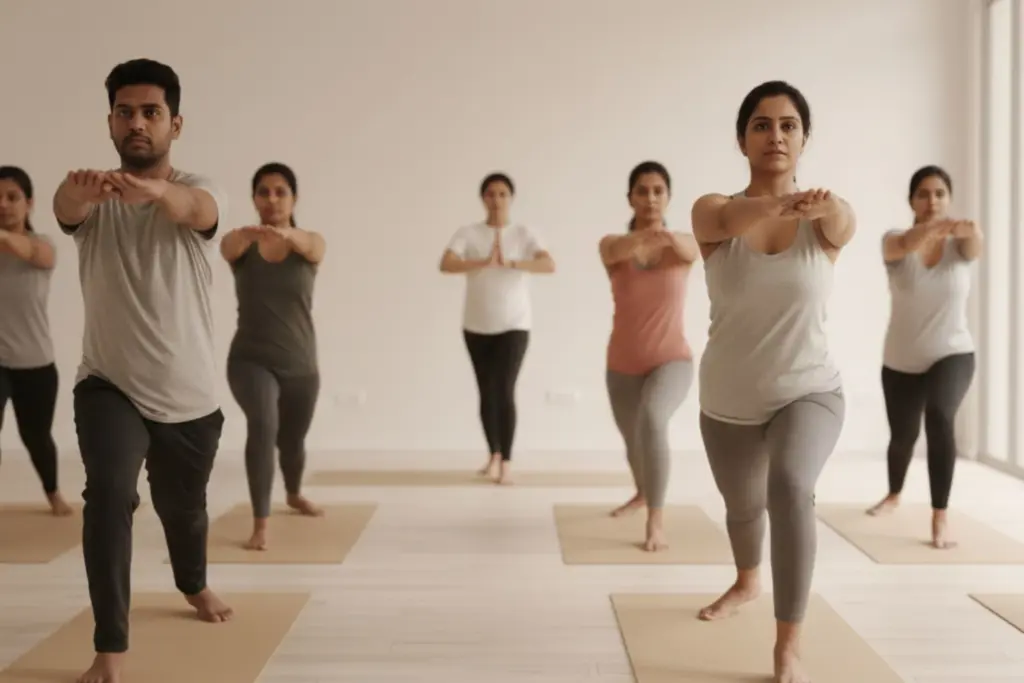
After 3–6 months:
- With regular practice, yoga starts showing up beyond the mat:
- You feel fitter and more mobile in daily life
- The body looks more defined
- Better stamina and less fatigue during the day
- A calmer mind and improved focus
- Many people notice better digestion and fewer bloating episodes
- Ongoing aches often reduce, and some chronic stiffness may ease significantly
After 1 year:
At this stage, yoga stops feeling like a workout routine and starts feeling like part of your lifestyle:
- Long-term strength and joint stability
- Deep, comfortable flexibility
- More consistent mood and stress control
- Better sleep quality and recovery
What decides how fast you’ll see results?
Consistency beats intensity. A short daily practice usually works faster than occasional long sessions. A practical rhythm:
- 20–30 minutes most days, or
- 45–60 minutes, 3–4 days a week
Your style of yoga also matters:
- Want faster strength + sweat? Try Power/Vinyasa styles.
- Want flexibility + calm? Try Hatha, Yin, or Restorative.
Your starting point counts too. If you’re stiff or completely new, progress may feel slower at first, but it’s often more meaningful and steady. If you’re already active, you may notice changes quickly. Either way, the journey is valid.
Who can benefit from yoga?
Pretty much everyone, because yoga can be adapted:
- Kids, adults, seniors
- Beginners with zero experience
- People with stiff bodies
- People recovering from injuries (with guidance/modifications)
Also Read | What are the best yoga routines for winter blues at home?
Yoga isn’t a “quick fix.” It’s a slow, steady upgrade, body and mind together. If you practice consistently and listen to your limits, you’ll reach a point where you suddenly realise that your body and life are transforming.