

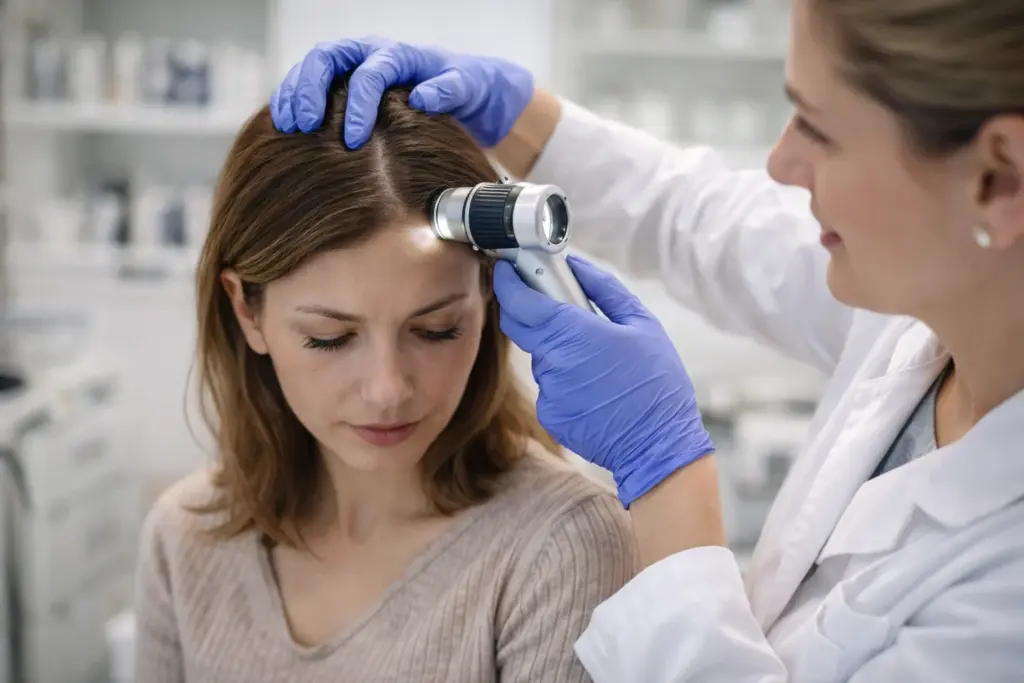
Hair loss treatments: Hair loss isn’t just a “men’s issue.” Walk into any pharmacy, and you’ll see rows of products such as serums, foams, gummies, and shampoos that swear they’ll bring back volume for women, too. But let’s be honest: most of us have stood in that aisle wondering, Do any of these actually work, or is it just expensive hope in a bottle?
First, what’s really going on with women’s hair loss?
Unlike guys, where bald spots and receding hairlines are the usual suspects, women’s hair loss often shows up as overall thinning. You might notice more hair on the pillow, or that your ponytail feels smaller. Stress, hormones, genetics, thyroid issues, and even a tight hairstyle are some of the triggers that can play a role. Which makes finding a one-size-fits-all fix… nearly impossible.
Also Read | Hair fall in winter: Is it real and how to prevent it?
Hair loss treatments that have some backing:
Dermatologists tend to agree on a few treatments that show real results, though “real” doesn’t mean miracle overnight growth. Minoxidil (you’ve seen the brand Rogaine) is still the most talked-about option. It doesn’t work for everyone, but for some women it slows shedding and encourages regrowth over several months. Key word: months. Patience is part of the package.
Low-level laser therapy devices also have growing evidence behind them. They look a little sci-fi, think glowing helmets or combs, but studies suggest they can stimulate follicles. Again, not a guarantee, but promising enough that dermatologists sometimes recommend them.
Then there are prescription options like spironolactone, especially when hormones are part of the problem. It’s not casually handed out, but experts do use it in certain cases with good results.
What about shampoos and supplements?
Here’s where things get murkier. Caffeine shampoos, biotin capsules, and “hair growth gummies” are popular, but most doctors say the evidence is thin. If you’re deficient in something, like iron or vitamin D, then correcting that can absolutely help. But if your levels are fine? More vitamins won’t magically push out new strands.
And shampoos? At best, they make your existing hair look fuller and healthier. Nothing wrong with that, but don’t expect them to stop shedding if there’s an underlying cause.
Experts’ take: Manage expectations
If you ask dermatologists what frustrates them most, it’s when people expect dramatic regrowth. Treatments can work, but they usually mean modest improvements with slowing the loss, thickening what’s left, and maybe regrowing some hair. That’s still worth celebrating, but it’s not the same as turning back the clock ten years.
Another thing experts stress: timing matters. The sooner you address hair loss, the better your chances. Waiting until half your volume is gone makes it harder to recover.
Are hair loss treatments worth trying?
In my opinion? Yes, if it bothers you and you’re realistic. No cream or capsule can rewrite genetics, but the right treatment can help you hold onto what you’ve got and sometimes even gain a little back. Pair that with smart habits like opting for gentler hairstyles, less heat damage, stress management, and you’re stacking the odds in your favour.
Also Read | From thinning to dullness: 6 hair changes that signal health issues
Some treatments really do work, but none of them are magic bullets. If you’re serious, skip the endless product roulette and see a dermatologist. It’ll save you money, time, and a lot of late-night Googling.