

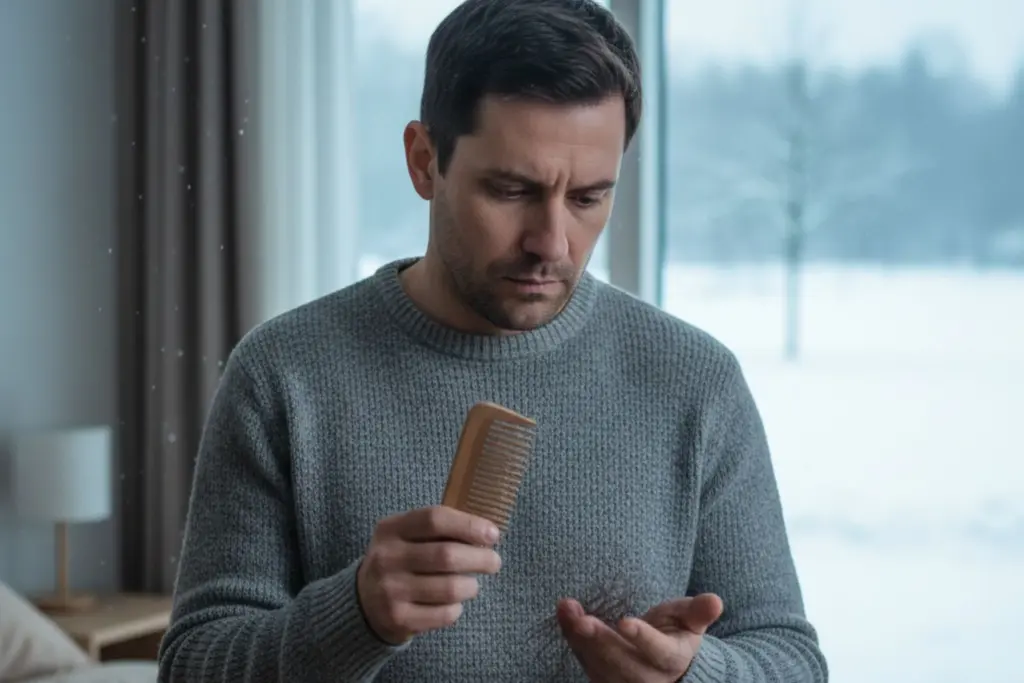
Hair fall in winter: Every winter, like clockwork, people start noticing extra strands on their pillows, sweaters, and bathroom floors. You run your fingers through your hair, and a few strands come away with it. Cue the panic. Is the cold weather actually making your hair fall out, or are you just imagining it?
Let’s clear the air. Yes, hair fall can worsen in winter. But it’s not as simple as “cold weather = hair loss.”
Also Read | Androgenetic alopecia: Early signs of pattern baldness you shouldn’t ignore
Why does hair fall feel worse in winter?
Winter does a number on your scalp. The air gets dry, the heaters run non-stop, and the humidity drops. Your scalp loses moisture and becomes flaky or itchy. A dry scalp means weaker roots, which makes hair fall more noticeable.
Then there’s the shower problem. Hot water feels amazing when it’s freezing outside, but it also strips away natural oils. Those oils protect your scalp and keep hair from breaking. When they’re gone, your hair becomes brittle and sheds faster.
And don’t forget how we treat our hair in winter. Hats, scarves, and wool sweaters rub against your hair, causing friction. If you’ve ever pulled off a beanie and heard that static crackle, that’s your hair begging for mercy.
When to worry about hair fall in winter?
Here’s something people often overlook: hair naturally sheds more in certain seasons. Studies show that many of us experience a slight increase in hair fall in late fall and winter. It’s part of the body’s renewal cycle. Annoying, yes. Unnatural, no.
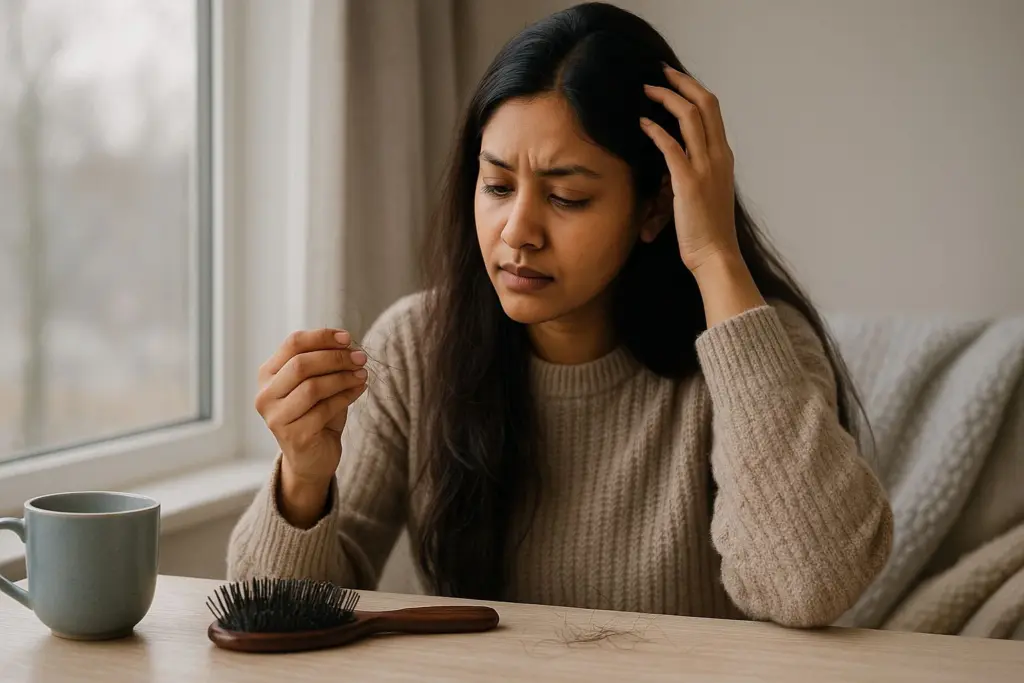
So if you’re seeing a few extra strands, it might just be your body doing its thing. However, if the shedding seems excessive or your scalp feels sore or inflamed, that’s worth looking into.
How to minimise hair fall in winter?
Start with hydration. Drink more water than you think you need. Most of us forget that hydration also affects hair health.
Switch to a mild shampoo that doesn’t strip your scalp. If your hair feels squeaky-clean, that’s actually a bad sign. Follow up with a conditioner or a light hair oil. A few drops of argan or coconut oil massaged into the scalp can make a world of difference.
Try to avoid super-hot showers. Warm water is fine, but not steaming. And if your scalp is flaky, resist the urge to scratch. Gentle exfoliation or a scalp serum will do more good.
Also Read | Alopecia areata: What to know about this autoimmune hair loss
Also, watch your diet. Winters make us reach for comfort food, but your hair needs protein, iron, and omega-3 fatty acids to stay strong. Add a handful of nuts, eggs, or leafy greens to your meals.
If you’re losing clumps of hair or notice bald spots, don’t wait it out. It might not be “just winter.” Hormones, thyroid issues, or stress can all contribute to the condition. In that case, see a dermatologist or trichologist. Otherwise, a bit of extra shedding in winter is normal. Be gentle, stay consistent with care, and don’t freak out over a few extra strands. Your hair will forgive you by spring.