
Air purifiers and lung cancer risk: Air pollution isn’t something many of us “occasionally” face anymore; it’s part of daily life. Hazy mornings, traffic fumes, construction dust, and that familiar grey layer in the air have become normal in many cities.
Most people know polluted air can worsen asthma, allergies, and heart health. But there’s another concern that doesn’t get discussed enough: breathing dirty air for years can also raise the risk of lung cancer, even in people who have never smoked.
Also Read | What is AQI? PM2.5 vs PM10 explained for families
Can air pollution cause lung cancer?
Your lungs are built to take in oxygen and filter out unwanted particles. The problem starts when the air you breathe carries a constant mix of harmful pollutants. These tiny particles and gases can travel deep into the lungs, irritate the airways, and in some cases enter the bloodstream. With long-term exposure, this can lead to:
- Ongoing inflammation inside the lung tissue
- cell damage from oxidative stress
- changes in how cells repair themselves over time
- and in some cases, DNA-level changes that may increase cancer risk
Pollutants that cause the most damage:
- PM2.5 (fine particulate matter): Extremely tiny particles that can reach the deepest parts of the lungs.
- PM10: Larger than PM2.5, but still irritates airways and contributes to respiratory issues.
- Nitrogen dioxide (NO₂): Commonly released from vehicle exhaust and industrial activity.
- VOCs (volatile organic compounds): Gases released from paints, cleaning products, solvents, smoke, and some household materials.
What exactly does an air purifier do?
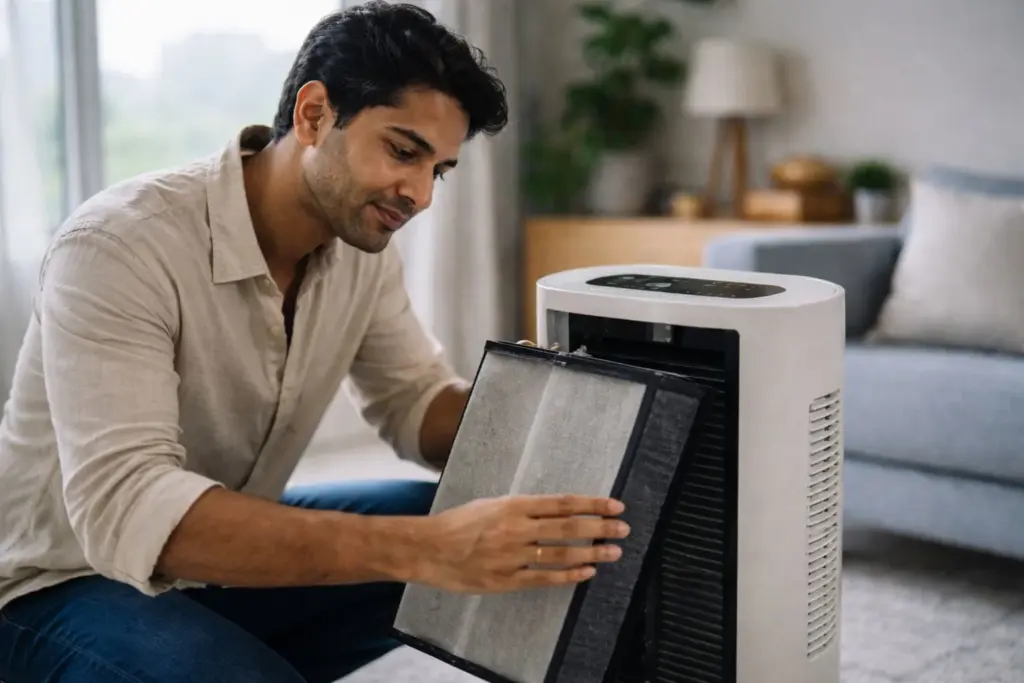
An air purifier is basically an indoor “air cleaning” device. It pulls room air in, passes it through filters, and pushes cleaner air back out. The goal is simple: reduce what you breathe while you’re indoors. Most good air purifiers use a combination of:
- HEPA filter: Traps very small particles like dust, pollen, and fine pollution (including PM2.5).
- Activated carbon filter: Helps absorb gases, smells, and some chemical pollutants like VOCs.
- UV/ionisers (in some models): Used to reduce germs or help trap particles.
Can an air purifier reduce lung cancer risk?
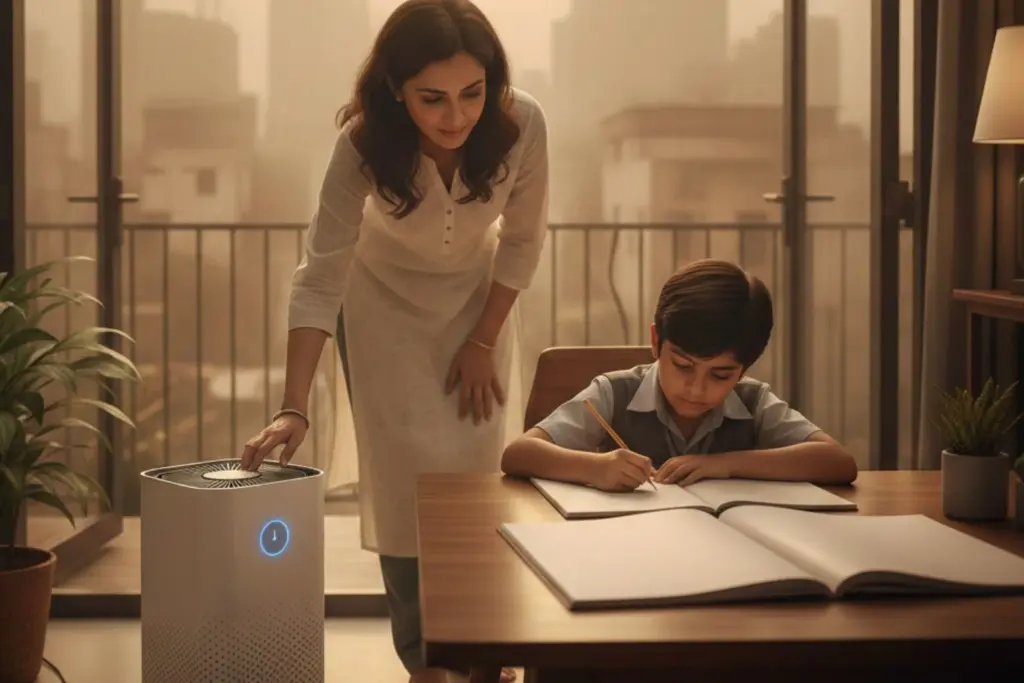
An air purifier can lower indoor pollution exposure, which may help reduce long-term harm, especially if the air outside is poor and windows stay closed often. Since many people spend a large part of the day indoors, cleaner indoor air can make a meaningful difference.
However, air purifiers are not a complete shield. They reduce exposure; they don’t erase risk. Pollution still exists outdoors, and indoor pollution can return if ventilation is poor or filters aren’t maintained. Still, if you’re trying to cut down daily exposure, a purifier, especially one with HEPA and activated carbon, can be a practical step in the right direction.
Who benefits most from an air purifier?
- People living in high-AQI cities where smog, traffic fumes, and dust are common
- Children and older adults, because their lungs and immune systems are more vulnerable
- Homes with smokers or regular exposure to secondhand smoke
- People with asthma, COPD, chronic bronchitis, or frequent breathing flare-ups
When to see a doctor
Seek medical advice if you have:
- A persistent cough that lasts for weeks
- Wheezing, tightness, or shortness of breath with normal activity
- Chest discomfort, unusual tiredness, or low stamina without a clear reason
- Repeated respiratory infections, especially if you’re getting sick again and again
Also Read | Early COPD symptoms you shouldn’t ignore
Think of an air purifier as a support tool, not a magic shield. For best protection, combine it with smart outdoor habits like checking AQI, limiting peak-pollution exposure, masking when needed, keeping indoor smoking out completely, and reducing indoor chemical fumes. You may not be able to control the air outside every day, but you can create a cleaner, safer breathing space inside your home.