
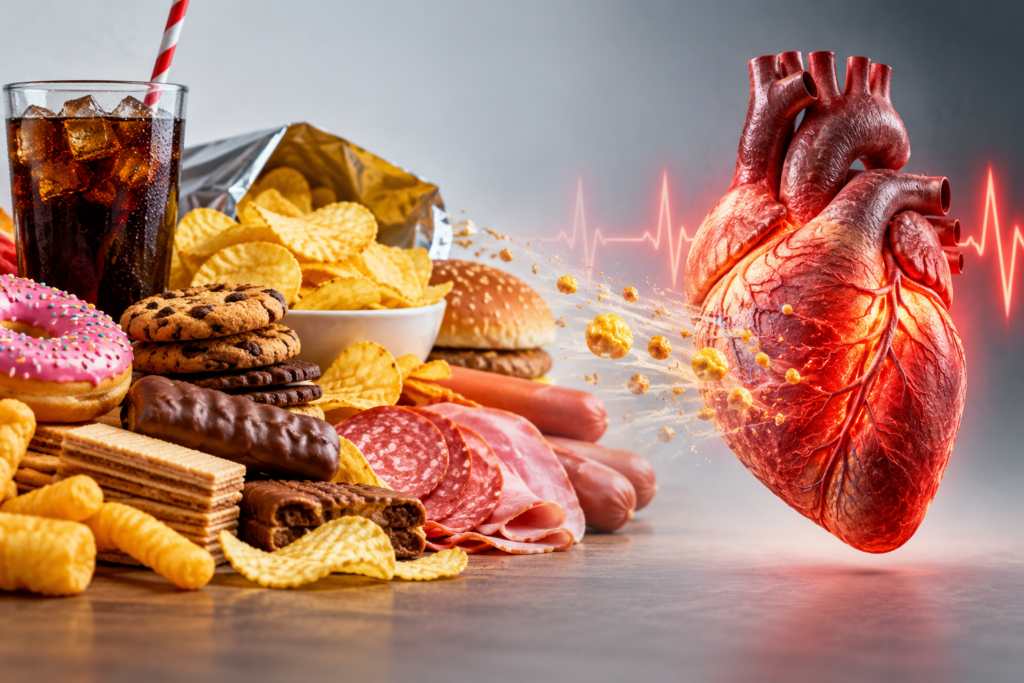
Effects of ultra-processed food: Higher intake of ultra-processed foods was linked to an increased risk of many health issues, according to a major study that looked at about 8.8 million persons. Most notably, there was a 14% increased risk of cardiovascular events for every extra 100 grams of ultra-processed food consumed daily. The results contribute to the mounting body of information regarding the detrimental effects of highly processed diets on health, even though they do not prove that these foods directly cause disease.
That extra bite can add up
Ultra-processed foods have quietly become a part of modern diets. Packaged snacks, drinks, processed meats, ready‑to‑eat meals, biscuits, and other convenience foods can make eating quick and easy. The new analysis shows that the more ultra‑processed food people eat, the higher the risk of many chronic health problems.
The researchers studied data from 51 long‑term cohort studies that followed 8.8 million adults from the Americas, Europe, Asia, and Oceania. Participants were tracked for two to 32 years so the researchers could see how eating patterns related to health over time.
Also Read | Study links ultra-processed foods to higher fat in thigh muscles
The heart takes the biggest hit
The strongest link was with heart health. Those eating the ultra‑processed food had a 24% higher risk of heart attacks and strokes than those eating the least. The study also showed that each extra 100 grams of food per day raised the risk of heart events by 14%, including serious outcomes like heart attack and stroke.
The risk goes beyond the heart
The risk is not for heart disease. Higher ultra‑processed food intake is also linked to other health problems, such as digestive issues, depression or anxiety, metabolic syndrome or diabetes, overweight or obesity, cancer, and death from any cause. For every 100 grams of ultra‑processed food eaten each day, the study found a 4% higher risk of cancer, a 3% higher risk of death from any cause, and a 2% higher risk of metabolic syndrome or diabetes.
What makes ultra-processed foods a concern?
There are reasons behind these links. Many ultra‑processed foods contain lots of added sugar, salt, and unhealthy fats but little fiber or nutrients. Food additives and chemicals formed during processing may also contribute. Researchers think ultra‑processed food can affect inflammation, insulin resistance, and the gut microbiome, though the exact ways are still being studied.
Also Read | Are all ultra-processed foods bad? How to choose better options
The takeaway: Convenience comes with a question
The findings do not say that every packaged food is bad or that eating one ultra‑processed product will automatically cause heart disease. This was a study so it can show links but not prove cause and effect. Still, the study stresses that total diet quality matters. Eating vegetables, fruits, whole grains, legumes, nuts, and other less processed foods can make daily meals richer in nutrients and reduce reliance on ultra‑processed options.